Tuesday, January 29, 2008

Car Crash Organizing and Spotting

Man and car liquids comming together, autodestruction takes the form of metamorphosis, osmosis and automutilation.(Crash, a movie by Cronenberg - the modern age of autodestruction)


Tuesday, August 21, 2007

Breath in [Ctrl+Alt+Del]


The Earth's surface and the clouds absorb visible and invisible radiation from the sun and re-emit much of the energy as infrared back to the atmosphere. Certain substances in the atmosphere, chiefly cloud droplets and water vapor, but also carbon dioxide, methane, nitrous oxide, sulfur hexafluoride, and chlorofluorocarbons absorb this infrared, and re-radiate it in all directions including back to Earth. Thus the greenhouse effect keeps the atmosphere and surface much warmer than if the infrared absorbers were absent from the atmosphere.

Greenhouse gases in the atmosphere

Recent increases in atmospheric carbon dioxide (CO2). The monthly CO2 measurements display small seasonal oscillations in an overall yearly uptrend; each year's maximum is reached during the northern hemisphere's late spring, and declines during the northern hemisphere growing season as plants remove some CO2 from the atmosphere.

The greenhouse effect was discovered by Joseph Fourier in 1824 and was first investigated quantitatively by Svante Arrhenius in 1896. It is the process by which absorption and emission of infrared radiation by atmospheric gases warms a planet's atmosphere and surface.

Existence of the greenhouse effect as such is not disputed. Naturally occurring greenhouse gases have a mean warming effect of about 30 °C (54 °F), without which Earth would be uninhabitable. The debate centers on how the strength of the greenhouse effect is changed when human activity increases the atmospheric concentrations of some greenhouse gases.

On Earth, the major natural greenhouse gases are water vapor, which causes about 36–70% of the greenhouse effect (not including clouds); carbon dioxide (CO2), which causes 9–26%; methane (CH4), which causes 4–9%; and ozone, which causes 3–7%.[16][17] Some other naturally occurring gases contribute very small fractions of the greenhouse effect; one of these, nitrous oxide (N2O), is increasing in concentration owing to human activity such as agriculture. The atmospheric concentrations of CO2 and methane have increased by 31% and 149% respectively above pre-industrial levels since 1750. These levels are considerably higher than at any time during the last 650,000 years, the period for which reliable data has been extracted from ice cores. From less direct geological evidence it is believed that CO2 values this high were last attained 20 million years ago.[18] Fossil fuel burning has produced about three-quarters of the increase in CO2 from human activity over the past 20 years. Most of the rest is due to land-use change, in particular deforestation.

The present atmospheric concentration of CO2 is about 383 parts per million (ppm) by volume.[20] Future CO2 levels are expected to rise due to ongoing burning of fossil fuels and land-use change. The rate of rise will depend on uncertain economic, sociological, technological, and natural developments, but may be ultimately limited by the availability of fossil fuels. The IPCC Special Report on Emissions Scenarios gives a wide range of future CO2 scenarios, ranging from 541 to 970 ppm by the year 2100.[21] Fossil fuel reserves are sufficient to reach this level and continue emissions past 2100, if coal, tar sands or methane clathrates are extensively used.

Positive (reinforcing) feedback effects such as the expected release of methane from the melting of permafrost peat bogs in Siberia (possibly up to 70,000 million tonnes) may lead to significant additional sources of greenhouse gas emissions[23] not included in climate models cited by the IPCC.

Feedbacks

The effects of forcing agents on the climate are complicated by various feedback processes.

One of the most pronounced feedback effects relates to the evaporation of water. In the case of warming by the addition of long-lived greenhouse gases such as CO2, the initial warming will cause more water to be evaporated into the atmosphere. Since water vapor itself acts as a greenhouse gas, this causes still more warming; the warming causes more water vapor to be evaporated, and so forth until a new dynamic equilibrium concentration of water vapor is reached with a much larger greenhouse effect than that due to CO2 alone. (Although this feedback process involves an increase in the absolute moisture content of the air, the relative humidity stays nearly constant or even decreases slightly because the air is warmer.) This feedback effect can only be reversed slowly as CO2 has a long average atmospheric lifetime.

Feedback effects due to clouds are an area of ongoing research. Seen from below, clouds emit infrared radiation back to the surface, and so exert a warming effect. Seen from above, the same clouds reflect sunlight and emit infrared radiation to space, and so exert a cooling effect. Whether the net effect is warming or cooling depends on details such as the type and altitude of the cloud. These details are difficult to represent in climate models, in part because clouds are much smaller than the spacing between points on the computational grids of climate models (about 125 to 500 km for models used in the IPCC Fourth Assessment Report). Nevertheless, cloud feedback is second only to water vapor feedback and is positive in all the models that were used in the IPCC Fourth Assessment Report.

Another important feedback process is ice-albedo feedback.[25] When global temperatures increase, ice near the poles melts at an increasing rate. As the ice melts, land or open water takes its place. Both land and open water are on average less reflective than ice, and thus absorb more solar radiation. This causes more warming, which in turn causes more melting, and this cycle continues.

Positive feedback due to release of CO2 and CH4 from thawing permafrost is an additional mechanism contributing to warming. Possible positive feedback due to CH4 release from melting seabed ices is a further mechanism to be considered.

The ocean's ability to sequester carbon is expected to decline as it warms, because the resulting low nutrient levels of the mesopelagic zone limits the growth of diatoms in favour of smaller phytoplankton that are poorer biological pumps of carbon.

Monday, April 02, 2007

The cyanide ion > if used as poison, is generally delivered in the form of gaseous hydrogen cyanide, potassium cyanide or sodium cyanide


Mechanism of toxicity

Cyanide is an irreversible enzyme inhibitor. Cyanide ions bind to the iron atom of the enzyme cytochrome c oxidase (also known as aa3) in the fourth complex in the mitochondrial membrane in the mitochondria of cells. This denatures the enzyme, and the final transport of electrons from cytochrome c oxidase to oxygen cannot be completed. As a result, the electron transport chain is disrupted, meaning that the cell can no longer aerobically produce ATP for energy.

Tissues that mainly depend on aerobic respiration, such as the central nervous system and the heart, are particularly affected.

Plants contain an alternative pathway for respiration in their mitochondria. The alternate oxidase is not as efficient as the normal pathway, but immune to cyanide. As a result, plants are insensitive to concentrations of cyanide that are lethal to animals, and a few species (e.g. the Giant Bamboo in its shoots) are known to contain cyanides.[4] Interestingly, the Greater Bamboo Lemur is able to consume lethal doses of the Giant Bamboo shoots with no effect. The reason for its immunity is not yet understood.

Clinical symptoms

It is difficult to give dose figures in this section due to the rapid metabolism of cyanide in the human body. Animal studies are of little help, as different species have widely different sensitivities to cyanide: it is quite possible that there is also a considerable range of sensitivity among human individuals. The Regulatory information section below may give some guidance.

Suicide

Cyanide salts are sometimes used as fast-acting suicide devices. Cyanide is reputed to work faster on an empty stomach, possibly because the anion is protonated by stomach acids to give HCN. Famous cyanide salt suicides include:

* Erwin Rommel
* Adolf Hitler (likely, see article on Hitler's death)
* Eva Braun
* Wallace Carothers
* Joseph Goebbels
* Hermann Gƶring
* Heinrich Himmler
* Alan Turing
* Odilo Globocnik
* Martin Bormann
* A North-Korean agent identified as Kim Sung Il, who along with a female accomplice in police custody in Bahrain bit into cyanide tablets hidden in cigarettes after having left a bomb onboard Korean Air Flight 858 which subsequently exploded over the Indian Ocean on November 29, 1987. The woman's life was saved by a quick-thinking police officer who knocked the cigarette away at the last second.
* Ramón Sampedro
* Gavrilo Princip attempted suicide, but failed
* Nedeljko Čabrinović attempted suicide, but failed
* Behzad Nabavi attempted suicide, but failed

Some espionage agents also carried glasses with cyanide in the frames. If they were caught by the enemy they could 'casually' chew the frame, releasing the cyanide, and die before having information extracted from them.[citation needed] Members of the Liberation Tigers of Tamil Eelam which operate in north-eastern Sri Lanka are probably the most reported to use capsules made out of cyanide compound/compounds, where each member of the militia wears a capsule round their neck, which is used to commit suicide when they are about to be captured by the security forces of Sri Lanka.

War

Cyanides were stockpiled in both the Soviet and the United States chemical weapons arsenals in the 1950s and 1960s.[citation needed] During the Cold War, the Soviet Union was thought to be planning to use hydrogen cyanide as a "blitzkrieg" weapon to clear a path through the opposing front line, knowing that the hydrogen cyanide would dissipate and allow unprotected access to the captured zone[citation needed]. However, as a military agent, hydrogen cyanide was not considered very effective, since it is lighter than air and need a significant dose to incapacitate or kill.

Tuesday, October 17, 2006

Some Conclusions of DocMarCell


We can make this statement, without the shadow of a doubt, that humankind developed from destruction towards its inexorable autodestruction. This is our thesis to demonstrate. That looking from these days back, to the early days of diseases and wars, the concept of destruction is old-fashioned and it seems to be less demonic. What really scares us is the quickly spread of a brand new concept (its date of birth cannot be precisely established, but could be indicated arround the beginning of the XXth century). This new concept is AUTODESTRUCTION of the humankind and this is what we call the contemporary phase of development of the humankind. This is the baroque phase, the "summum" and beyond it we cannot foresee anything for the moment. The evil which affects humankind has now this shape. Who would have been the turning point from destruction to autodestruction, what would be the causes, and can we, nevertheless, foresee something after this autodestruction point in which we are stuck?

"The Conclusions" of DocMarCell are some of them based on true facts, some of them are visionary, some come from his subjective memory.


Everything is gathered in an archive of images that shouldn't be forget. This archive is a possible memory of humankind. A history of the Evil which affected it. And this archive contains probably the ideas about how would appear to be a new era to come.


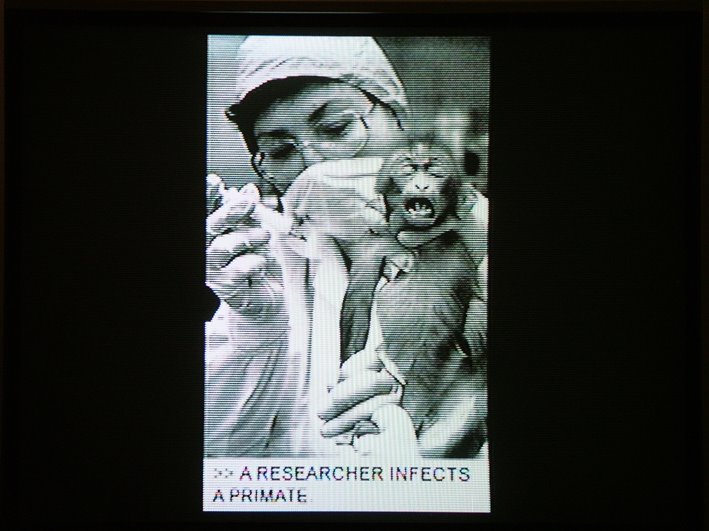
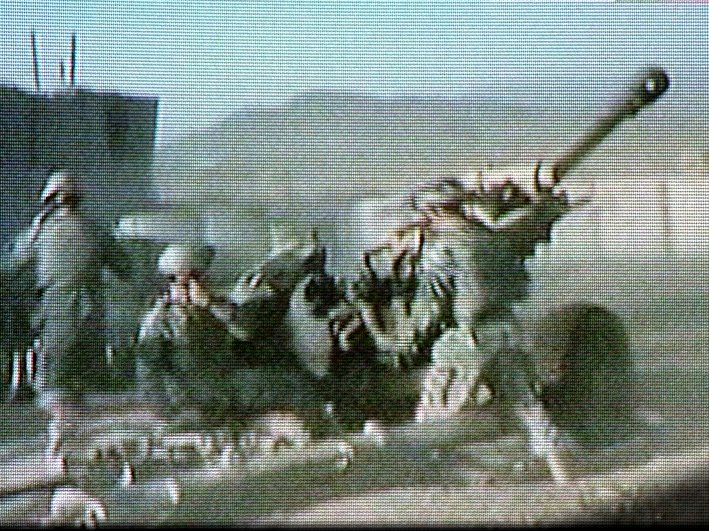
The images of the archive, in the form of "print screens", illustrate the concept of destruction (human pandemic, war, terrorism) and the concept of autodestruction (DNA code manipulation, autoerasing of electronic information). All the history of human Evil from The Archaic, to The Modern Era, until this baroque Phase is intended to be illustrated in the course of development of this project.

One immediate conclusion comes at light: if destruction makes us think about macro structures, autodestruction would action especially at the cellular and informational level.


Monday, October 09, 2006

DISEASES fallen from heaven are HISTORY cause we are heading for NEW TIMES


DESTRUCTION is such an old fashioned concept


Advertisement for a radium based facial cream

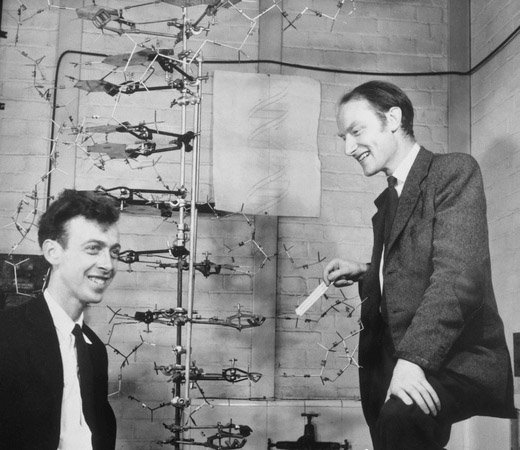
DNA HELIX STRUCTURE

Memorie flash cu autodistrugere


Cei care traiau cu teama permanenta ca datele lor pot intra pe maini neprietenoase au acum la dispozitie un nou dispozitiv pentru a le transporta in siguranta. Relativ.
Data Traveler Elite Privacy Edition de la Kingston are o capacitate de 4 GB si floseste unsistem de criptare a datelor in 128-biti, adaugand in plus inca o optiune de securitate: posibilitatea de autodistrugere. Nu va ganditi ca o sa explodeze. Sistemul functioneaza mult mai simplu. Daca raufacatorul incearca sa ghiceasca parola care protejeaza datele si greseste de 25 de ori la rand, flash-drive-ul va sterge automat toate datele stocate. Bineinteles, daca parola pe care v-ati ales-o e usor de ghicit, va puteti lua adio de la securitatea informatiilor. In afara de acest mic incovenient, memoria pare a fi o buna solutie de transport securizat.

BY THOSE TIMES THINGS GOT SHARPNESS


In 1962 James Watson (1928– ), Francis Crick (1916–2004), and Maurice Wilkins (1916–2004) jointly received the Nobel Prize in medicine or physiology for their determination in 1953 of the structure of deoxyribonucleic acid (DNA). Because the Nobel Prize can be awarded only to the living, Wilkins's colleague Rosalind Franklin (1920–1958), who died of cancer at the age of 37, could not be honored.

The molecule that is the basis for heredity, DNA, contains the patterns for constructing proteins in the body, including the various enzymes. A new understanding of heredity and hereditary disease was possible once it was determined that DNA consists of two chains twisted around each other, or double helixes, of alternating phosphate and sugar groups and that the two chains are held together by hydrogen bonds between pairs of organic bases—adenine (A) with thymine (T) and guanine (G) with cytosine (C). Modern biotechnology also has its basis in the structural knowledge of DNA—in this case the scientist's ability to modify the DNA of host cells that will then produce a desired product, for example, insulin.

The background for the work of the four scientists was formed by several scientific breakthroughs: the progress made by X-ray crystallographers in studying organic macromolecules; the growing evidence supplied by geneticists that it was DNA, not protein, in chromosomes that was responsible for heredity; Erwin Chargaff's experimental finding that there are equal numbers of A and T bases and of G and C bases in DNA; and Linus Pauling's discovery that the molecules of some proteins have helical shapes—arrived at through the use of atomic models and a keen knowledge of the possible disposition of various atoms.

Of the four DNA researchers only Rosalind Franklin had any degrees in chemistry. The daughter of a prominent London banking family, where all children—girls and boys—were encouraged to develop their individual aptitudes, she held her undergraduate and graduate degrees from Cambridge University. During World War II she gave up her research scholarship to contribute to the war effort at the British Coal Utilization Research Association, where she performed fundamental investigations on the properties of coal and graphite. After the war she joined the Laboratoire Centrale des Services Chimiques de l'Etat in Paris, where she was introduced to the technique of X-ray crystallography and rapidly became a respected authority in this field. In 1951 she returned to England to King's College, London, where her charge was to upgrade the X-ray crystallographic laboratory there for work with DNA.

Already at work at King's College was Maurice Wilkins, a New Zealand–born but Cambridge-educated physicist. As a new Ph.D. he worked during World War II on the improvement of cathode-ray tube screens for use in radar and then was shipped out to the United States to work on the Manhattan Project. Like many other nuclear physicists he became disillusioned with his subject when it was applied to the creation of the atomic bomb; he turned instead to biophysics, working with his Cambridge mentor, John T. Randall—who had undergone a similar conversion—first at the University of St. Andrews in Scotland and then at King's College, London. It was Wilkins's idea to study DNA by X-ray crystallographic techniques, which he had already begun to implement when Franklin was appointed by Randall. The relationship between Wilkins and Franklin was unfortunately a poor one and probably slowed their progress.

Meanwhile, in 1951 23-year-old James Watson, a Chicago-born American, arrived at the Cavendish Laboratory in Cambridge. Watson had two degrees in zoology: a bachelor's degree from the University of Chicago and a doctorate from the University of Indiana, where he became interested in genetics. He worked under Salvador E. Luria on bacteriophages, the viruses that invade bacteria in order to reproduce—a topic for which Luria received a Nobel Prize in medicine in 1969. Watson then went to Denmark for postdoctoral work—to continue studying viruses and to remedy his relative ignorance of chemistry. At a conference at the Zoological Station at Naples, Watson heard Wilkins talk on the molecular structure of DNA and saw his recent X-ray crystallographic photographs of DNA—and was hooked.

Watson soon moved to the Cavendish Laboratory. There several important X-ray crystallographic projects were in progress under William Lawrence Bragg's leadership, including Max Perutz's investigation of hemoglobin and John Kendrew's study of myoglobin—a protein in muscle tissue that stores oxygen. (Perutz and Kendrew received Nobel prizes in chemistry for their work in the same year that the prizes were awarded to the DNA researchers—1962.) Working under Perutz was Francis Crick, who had earned a bachelor's degree in physics from University College, London, and had helped develop radar and magnetic mines during World War II. Crick, another physicist in biology, was supposed to be writing a dissertation on the X-ray crystallography of hemoglobin when Watson arrived, eager to recruit a colleague for work on DNA. Inspired by Pauling's success in working with molecular models, Watson and Crick rapidly put together several models of DNA and attempted to incorporate all the evidence they could gather. Franklin's excellent X-ray photographs, to which they had gained access without her permission, were critical to the correct solution. The four scientists announced the structure of DNA in articles that appeared together in the same issue of Nature.

Then they moved off in different directions. Franklin went to Birkbeck College, London, to work in J. D. Bernal's laboratory—a much more congenial setting for her than King's College. Before her death she made important contributions to the X-ray crystallographic analysis of the structure of the tobacco mosaic virus—a landmark in the field. Wilkins applied X-ray techniques to the structural determination of nerve cell membranes and of ribonucleic acid (RNA)—a molecule that is associated with chemical synthesis in the living cell—while rising in rank and responsibility at King's College. Watson's subsequent career eventually took him to Cold Spring Harbor Laboratory of Quantitative Biology on Long Island, where as director from 1968 onward he led it to new heights as a center of research in molecular biology. From 1988 to 1992 he headed the National Center for Human Genome Research at the National Institutes of Health. Crick stayed at Cambridge and made fundamental contributions to unlocking the genetic code. He and Sydney Brenner demonstrated that each group of three adjacent bases on a single DNA strand codes for one specific amino acid. He also correctly hypothesized the existence of "transfer" RNA, which mediates between "messenger" RNA and amino acids. After 20 years at Cambridge, with several visiting professorships in the United States, Crick joined the Salk Institute for Biological Studies in La Jolla, California.

WELCOME TO THE FILTHYMAGIC OF THE HUMANKIND